Showing posts with label Diversity. Show all posts

Monday, November 30, 2020

Building equitable practices in schools in the midst of COVID-19

by Team XQ, XQ Rethink Together:  https://xqsuperschool.org/rethinktogether/equitable-practices-schools-covid19/

Image: thelearningcounsel.com

Last spring, the global pandemic interrupted schools and brought concerns over equity to the forefront of education discourse. The shift to remote and hybrid learning highlighted inequitable truths and provided a chance to rethink equitable practices — ones that recenter relationships, reinvent how they use time, and focus on deep learning experiences.

Equity in a school building doesn’t just happen, it is purposefully cultivated. 

As part of a panel hosted by the 2020 Aurora Institute Symposium, leaders from several XQ schools shared their ideas and practices on “How Intentional Equity Serves All Students.” The panel included incredible leaders from four XQ schools across America and offered clear takeaways for how to build equity into your remote and hybrid learning models. We wanted to extend the lessons from this workshop to those who attended and anyone else interested in being more intentional about building equitable practices.

Tips for Building and Maintaining Relationships with Students

Building caring relationships with students in a time when our regular social infrastructure is critical to the success of all students. 

  • Explain and reiterate that this is a mutual experience to create a commonality within the school community, including and especially with families
  • Ensure every student has at least one adult responsible and point-person for their academic and social wellbeing 
  • Leverage tools like Brooklyn Lab’s Success Coaching Playbook to embrace strength-based mindsets that cultivate motivation and engagement in academics
  • Reduce the advisor-to-student ratio to create close relationships in group settings quickly
  • Expand the advisory model to span multiple grades as a way to facilitate relationships between incoming students and upperclassmen 
  • Follow up daily — or multiple times a day — with students who have individualized education plans and may need help navigating complicated schedules 

Focuses on What Matters Most in Virtual and In-Person Classrooms

  • Focus on depth over breadth — challenge teachers to break away from traditional pressures and timelines to go in-depth on specific content.
  • Create work time throughout the virtual school day to give students an opportunity to concentrate on school work
  • Allow students to engage in different learning models — including whole group sessions and smaller group learning opportunities — and provide options when possible
  • Hold virtual office hours so students can access staff members regularly
  • Leverage technology, including social media, to expand access to professionals and experts in diverse fields for students 

Learn More From XQ School Leaders Who Are Committed to Equity 

Eric Collazo

Principal, Washington Leadership Academy

Eric is passionate about creating more equitable urban education. He mentors students and develops effective teachers in order to benefit the greater community. Eric attended the College of the Holy Cross. After graduating, Eric joined Teach For America. While teaching, Eric attended American University and earned a Master of Arts in Teaching. He now serves as the principal of Washington Leadership Academy.

Lillian Hsu

Principal, Latitude High School 

Lillian’s work is rooted in the belief that all students are capable of doing incredible things when given the right opportunity and support. Lillian has worked in a variety of educational settings such as Teacher Magazine and the television show Sesame Street. Lillian earned her B.A. in psychology from Yale University, her Master of Arts in Teaching from Brown University, and her Master’s in Education in School Leadership from the High Tech High Graduate School of Education.

Andy MacMannis

Assistant Head of School and Special Education Director,  Trinity Academy for the Performing Arts

Andy MacMannis has been at TAPA since 2010 and currently serves as assistant head of school and special education director. These jobs entail overseeing support services like special education, TAPA’s Title One programming, and all after-school programming. He also handles all fund development initiatives and “big-picture” planning, such as the management of TAPA XQ + RI. Prior to TAPA, Andy attended Providence College, majoring in Elementary and Special Education. While at PC, he worked for the YouthRAP after-school program in Providence. From there, he attended Brown University, where he received a Master’s degree in Urban Education Policy. 

Bennison Ntsakey

Director of Academics at Brooklyn Laboratory Schools

Bennison is a school leader who is driven by results that transform lives in the 21st century. He’s eager and wants to ensure that all of his learners master the skills needed to excel in college and their professional lives as ethical leaders. Bennison attended Syracuse University and earned a Master of Education in School Leadership Design from Columbia University. 

Additional Resources about Equity and Education 

As we constantly say, we are better when we work together. We are deeply committed to building and sharing resources from schools across the country. Check out these additional resources to learn how to build an equitable practice in your school both in a remote setting and a hybrid one: 

Monday, August 31, 2020

4 out of 5 international students are still in Australia – how we treat them will have consequences

by Angela Lehmann and Aasha Sriram, The Conversation:  https://theconversation.com/4-out-of-5-international-students-are-still-in-australia-how-we-treat-them-will-have-consequences-145099

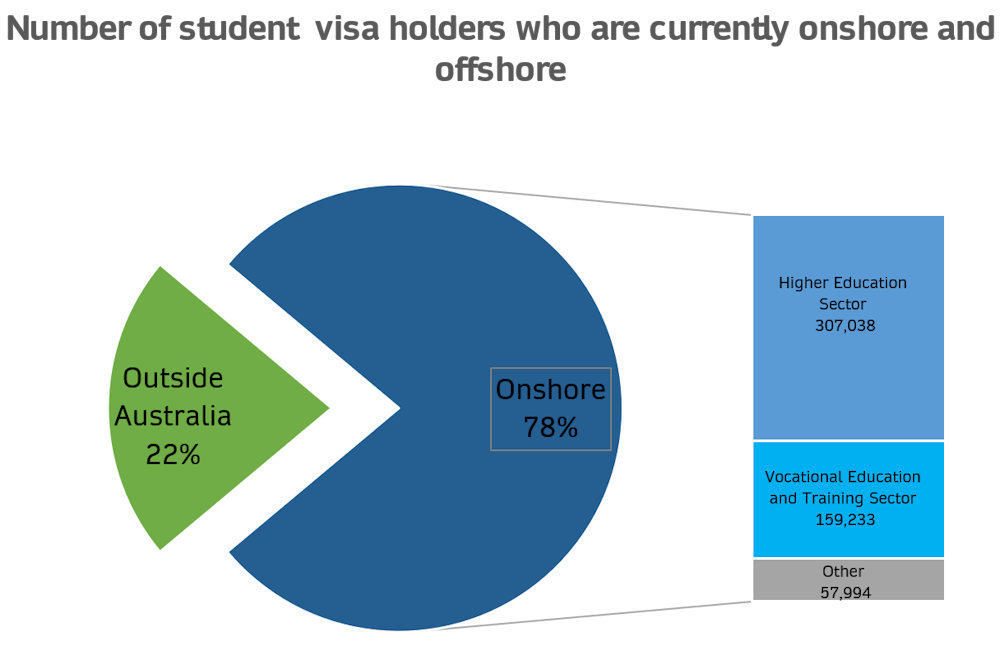
COVID-19 has not stopped international education. As of August 24, 524,000 international students were living among us in Australian cities and communities. They represent 78% of all student visa holders, according to data the Department of Home Affairs provided to us.

These students are potential ambassadors for Australia and our institutions. They could help shape our country’s reputation as a safe and welcoming destination in the post-pandemic world – but only if we look after them.

Pie chart and table showing numbers of international students in Australia and offshore
Data as of August 24 2020 provided by Department of Home Affairs, Author provided

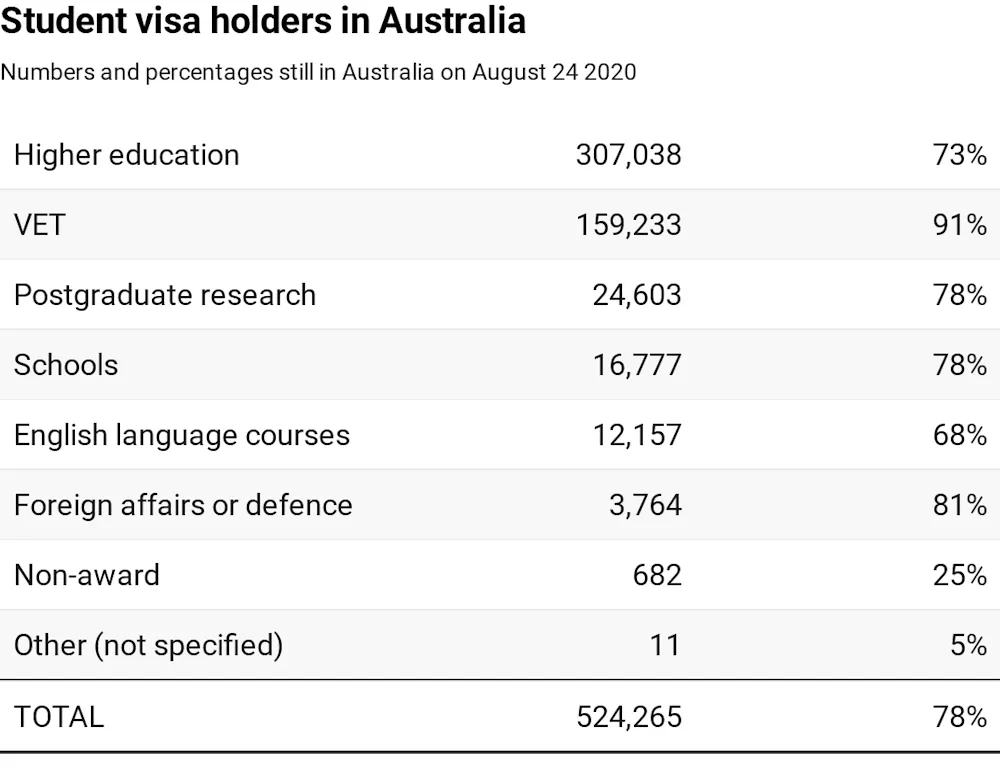
The numbers of students now in Australia vary across sectors. Currently, 73% of our international higher education students and 78% of postgraduate research students are here. The vast majority — 78% — of our international secondary school students are still here too.

The percentage is even higher for vocational education and training (VET): 91% of the sector’s international students are here, 159,233 in all.

Non-award programs (shorter courses that don’t lead to a degree or diploma) and English language programs (ELICOS) have the largest percentages of students now offshore.

Table showing numbers and percentages of student visa holders still in Australia
Data provided by Department of Home Affairs at authors' request, Author provided

The experiences these large numbers of students are having now will have a direct impact on their decisions and patterns of mobility once borders reopen.

However, institutions and government agencies continue to focus on outward-looking approaches to recovery, such as offshore recruitment and delivery, negotiating pilot safety corridors, and scenario planning for the reopening of borders. The onshore response to international education risks being severely neglected.

Students are comparing countries’ responses

International students in Australian cities and communities are of course talking about their situation. They are using social media, creating blogs and interacting constantly with families and friends back home and around the world.

During the pandemic, this peer-to-peer form of marketing is heightened in its global reach. Our students are constantly comparing their lives with students in both their home countries and Australia’s major competitor destinations.

As a result, the crisis of international student social support is the subject of global comparisons. Students and their families are weighing up what they are going through “here” compared to what others are going through “there”.

A life transformed in Melbourne

Arya is a full-time postgraduate student from India who is staying in Melbourne. We spoke with Arya as a part of a series of interviews with international students during COVID-19.

Her dream of studying in Australia was made possible through a combination of a student loan, borrowing from family, and savings after working for two years as a journalist. Prior to COVID-19, she relied on part-time jobs to support herself. This income was essential to her financial survival in Melbourne.

The first lockdown meant she lost both her jobs — one in hospitality and one at her university. As these sectors are struggling in this crisis, her prospect of finding a new job is bleak.

Arya is not eligible for federal government support such as  JobSeeker. But she might be able to get Victorian government support, including a voucher to buy groceries and a one-off payment of A$1,100. She can also apply for a modest grant from her university to cover some bills.

She has struggled to pay rent, but the moratorium on evictions has prevented her from becoming homeless. Her university and local community groups in Melbourne have also provided food hampers.

Arya’s goal was to study in Australia at a world-class institution and solidify her status within the upwardly mobile middle classes in India. Her life has been transformed into a struggle to eat, pay rent and avoid homelessness while keeping her grades up. Arya observes:

It is becoming more than an education. The question is shifting to how students live and survive in a global city midst a pandemic.

It’s even harder in the US

Arya is in contact with friends and fellow Indian students studying overseas. While her situation in Melbourne is dire, her friends in the US are struggling every day. Arya introduced us to Dhanya.

Dhanya, who moved to New York in 2017 to study, says she is struggling “despite doing everything right”. After recently graduating and finding a job, Dhanya lost her H1B sponsored visa for skilled workers as a result of the Trump administration’s recent freeze on visas. “The US government has not considered that we can’t get home,” Dhanya says.

She reports that she and many of her friends in similar situations have been told they can choose to work as unpaid interns.

US President Donald Trump sitting at desk in White House
President Donald Trump has frozen visas permitting foreign students to work in the United States. Kevin Lamarque/Reuters/AAP

Many American states enacted a patchwork of temporary eviction moratoriums and the federal government issued a partial ban on evictions. These moratoriums have now largely expired, forcing students to rely on the discretion of landlords. As a non-citizen, Dhanya cannot receive unemployment benefits or a stimulus cheque.

Dhanya is unaware of any non-monetary support from her university or the government for international students. There are no free meal plans, grocery vouchers, or community-based food schemes.

Despite our Melbourne-based student living with the daily anxiety about her finances, she is comparing her experience relatively positively to her friends in the US.

Some countries are enhancing reputations

Students are paying attention to countries that are including international students and temporary migrants in their social policy response to COVID-19. Arya says:

The way countries handle this now is definitely going to impact how students see your country as a destination in the future.

Arya and her friends are keeping a keen eye on European destinations such as Germany and Sweden. They have also been impressed by Canada’s timely support for international students during this crisis.

It is not enough for Australia to rely on other nations doing badly on social welfare and support. We need to do more than aim to receive a comparatively “good” score on poverty, exploitation and vulnerability based on others doing worse.

Australia urgently needs to actively reshape international education market perceptions by demonstrating that we offer not only world-class education, but also world-class student support. And that starts with helping the cohort of more than half-a-million international students who currently call Australia home.

Monday, August 10, 2020

Why regional universities and communities need targeted help to ride out the coronavirus storm

by Mehmet Aslan, The Conversation:  https://theconversation.com/why-regional-universities-and-communities-need-targeted-help-to-ride-out-the-coronavirus-storm-143355

Australian universities are expected to lose billions of dollars in revenue due to the impacts of COVID-19. The estimated lost revenue from international students alone is A$18 billion by 2024. While all universities are affected, regional universities and communities are the most vulnerable.

Regional communities have limited resources, so their universities play a pivotal role in their economies. These universities must adjust to the rapidly changing circumstances and government policy changes, or risk jeopardising regional economic growth and jobs. Without targeted government support for these smaller universities, the long-term impacts on regional communities could be devastating.

The Regional Universities Network (RUN) includes CQUniversity, Southern Cross University, Federation University Australia, University of New England, University of Southern Queensland, University of the Sunshine Coast and Charles Sturt University. CQUniversity, where 39% of students are international students, has a revenue shortfall of  A$116 million for 2020. Charles Sturt University (32% international students) faces a loss of about A$80 million.

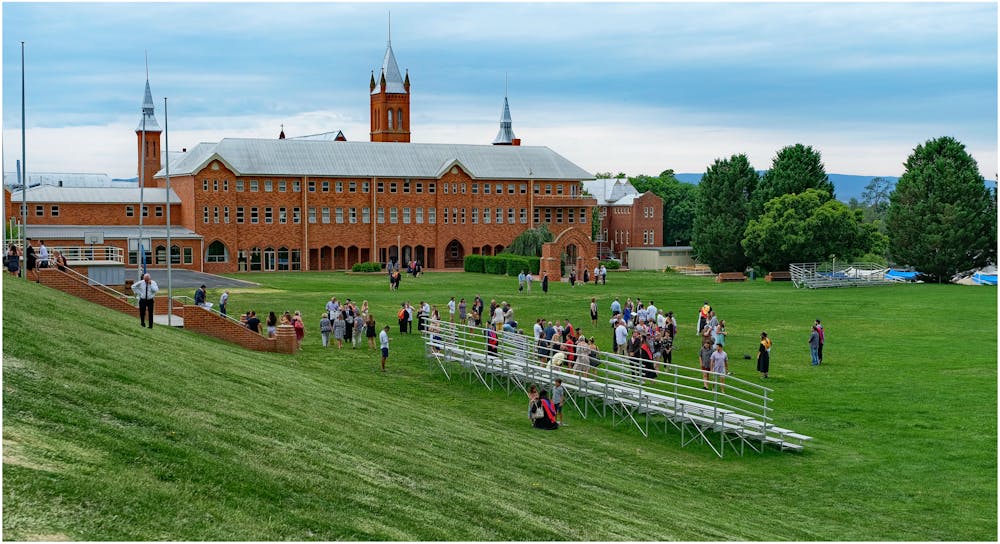
Charles Sturt University campus at Bathurst, NSW
Charles Sturt University has announced cuts to courses and jobs because of its deficit. Geoff Whalan/Flickr, CC BY-NC-ND

What are the regional economic impacts?

All universities face job losses as a result of COVID-19. But the impacts of these job losses are greatest for regional economies.

RUN chair Helen Bartlett told a federal parliamentary committee hearing in May:

Job losses from regional universities have a significant impact on regional communities when there are few alternatives for professional employment locally.

RUN chair Helen Bartlett
The RUN chair, Professor Helen Bartlett, notes that when regional universities shed jobs their local communities have few professional employment alternatives. USC News

She called on the government to double the annual regional loading funding of A$74 million.

Regional universities educate around  115,000 students each year. That’s about 9% of enrolments at Australian public universities.

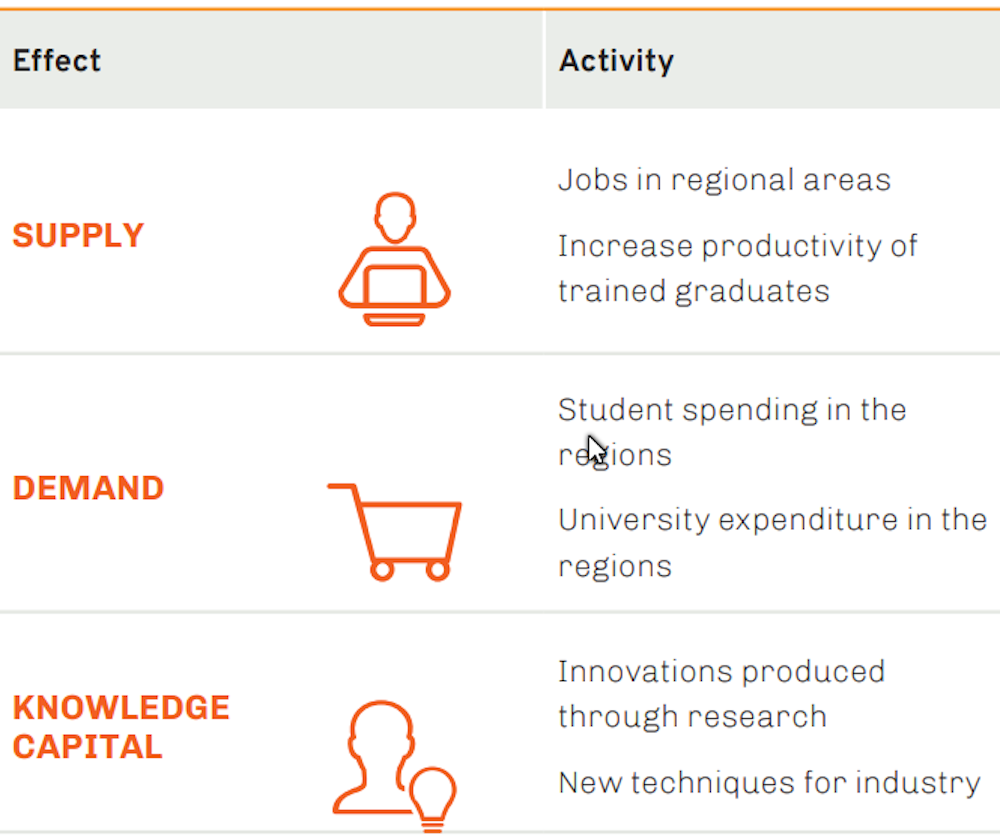
A 2018 study found regional universities inject A$1.7 billion a year into their local economies. And seven out of ten graduates go on to work in regional areas.

Regional universities also contribute over A$2.1 billion and more than 14,000 full-time jobs to the national economy.

Table showing the three main effects of regional universities on their regions
'The economic impact of the Regional Universities Network'/RUN

What is the government doing?

In April the federal government guaranteed A$18 billion in university funding this year to help the sector through the coronavirus crisis. It also provided A$100 million in regulatory fee relief.

Universities Australia chair Deborah Terry
The Universities Australia chair, Deborah Terry, has warned as many as 21,000 university jobs could be lost. Mick Tsikas/AAP

The chair of Universities Australia, Deborah Terry, welcomed this as a “first step”. However, she warned an estimated 21,000 jobs would still be lost.

In June, the government announced the Job-ready Graduates Package. It plans to lower student fees for selected courses (and raise others) to encourage study for what the government deems to be jobs of the future.

Extra support announced for regional universities includes:

  • 3.5% growth in Commonwealth Grant Scheme funding to regional and remote campuses

  • A$5,000 payments for students from outer regional, remote and very remote areas who transfer to Certificate IV study or higher, for at least one year

  • a new A$500 million-a-year fund for programs that help Indigenous, regional and low socioeconomic status students get into university and graduate

  • A$48.4 million in research grants for regional universities to partner with industry and other universities to boost their research capacity

  • A$21 million to set up new regional university centres

  • guaranteed bachelor-level Commonwealth-supported places to support more Indigenous students from regional and remote areas to go to any public university.

The government has also promised a A$900 million industry linkage fund. The aim is to help universities build stronger relationships with STEM industries and provide work-integrated learning opportunities.

What does this mean for regional universities?

The Regional Universities Network welcomed the package. Bartlett said:

Lowering the cost of the student contribution for courses such as nursing, allied health, teaching, agriculture, engineering, IT and maths should encourage greater uptake by regional students in these areas. It is estimated that there should be more places in the regions. More graduates from our universities will produce more graduates to work in regional Australia in areas of skills need.

As the COVID-19 economic battle is ever evolving, the tertiary education sector must be vigilant. Spending should be prioritised to make it equitable for all universities and their communities. Decision-makers need to be aware of the key issues affecting the success of tertiary education in the regions and their dependent communities.

Regional engagement activities and programs, backed by increased funding, improve the prospects of successfully weathering the COVID-19 storm. Regional universities can deliver national benefits, by overcoming skill shortages and meeting local workforce needs, while contributing to public and private community services such as schools and health services.

The government package is important for all universities, but this support is the only means of regional universities surviving. If they are not supported and are forced to close, regional education and economies will suffer for many years.

Saturday, June 6, 2020

The PhD: Online learning for all

This is a guest post from Anna Pilson. Anna is a PhD student at Durham University School of Education. Her ESRC-funded project aims to create a participatory action research model that positions children with a vision impairment as knowledge producers and change agents. She tweets as @pilsonanna.
andres-jasso-jfwtA-Mt9uc-unsplash
Now that the Covid-19 pandemic has radically altered the organisation of university life for the foreseeable future, ‘everyday ableism’ can be (unwittingly) perpetuated by virtual teaching methods. But we also have a potentially generative moment to change this narrative.
Given that in that academic year 2018/19, a sixth of all home university students declared that they had a disability, accessibility should be a central driver in the planning and delivery of Higher Education teaching and learning. Yet, as the Office for National Students states, real accessibility remains aspirational.
Moving online opens up all sorts of questions about (in)equality. Not just the bigger issues of digital access and digital literacy, but the nitty gritty of our planning and delivery. In an ideal world we would ensure that our online materials are accessible for all. We’d have British Sign Language interpretation, easy read materials, accessible transcripts. All of these things however, take time, expertise and money that we may not have immediately have access to. So, while I think that the Education sector should continue to strive for this idealism, in the meantime there are plenty of ways we as individuals can build in some simple strategies to improve our online teaching and communication straight away.
What can we do?
You may now be familiar (or perhaps overfamiliar!) with online learning and meeting platforms like Skype, Google Hangouts, Microsoft Teams and of course, Zoom. The great thing about all of these platforms is that they have in-built accessibility features that are really easy to apply, and can be used alongside some simple inclusive strategies to make online teaching accessible for all:
You can enable live captioning. This is when subtitles are generated in real time to present in text what the speaker is saying. This is really important for D/deaf or hard of hearing students, as this visual aid can compensate for the quite often variable video quality that might make lip reading difficult. However, captioning can of course also be beneficial to anyone with poor sound quality.
Don’t force your students to switch on their camera.  Being on camera can be really distracting, I mean, come on, we’ve all spent a good few minutes in a zoom meeting staring at ourselves, preening and sorting our hair out haven’t we? Not me of course, but hypothetically speaking (ahem). But in all seriousness, ‘Zoom Fatigue’ is becoming a common, and recognised, complaint. Navigating the dissonance caused by slight time delays between picture and sound can make participants feel uncomfortable, as can the loss of natural conversational rhythm. Also, the performative aspect of being ‘watched’ while having to be on camera may be anxiety-inducing.
The online environment can also make it difficult to take cues from body language, because often hand gestures can’t be seen and camera angles are not optimal, but actually this absence can enhance the quality of the verbal interaction taking place, because people are forced to articulate their meaning more clearly, which could be more inclusive for neurodivergent or visually-impaired students. So, you could switch off all cameras and instead use a moderator system, where one participant’s role is to note if and when participants wish to speak by looking for use of the ‘raise hand’ icon, or a note in chat. This can be used organise the order of speaking, and avoid people talking over one another, so as to make the flow of speech more coherent.
Provide transcripts/notes. Where possible do this in advance of the lecture, so that participants have the opportunity to organise notes, pre-empt any issues, set up screen readers or Braille displays, reformat the document according to personal need (for example, inverting colours of text/background, enlarging text, removing visual clutter), or familiarise themselves with the material beforehand, which can be really useful if they find concentration or retention of information difficult.
Consider the accessibility of the visual material you are sharing. Make sure any documents you provide use a sans serif font, which is easier to visually distinguish, such as Arial or Calibri. Ensure there is a good contrast between the colours of the font and background (e.g. black and white). Go for size 14 minimum and avoid too much use of italics or underlining. Any image should have a caption or descriptor. And any PDF should have optical character recognition enabled, which means it’s compatible with screen readers. This can be applied really easily in the settings of Adobe Acrobat or similar when creating a PDF.
Make your related Social Media presence accessible. A basic feature to be aware of is using ‘Camel Case’ in your hashtags. This means capitalising every the first letter of every word following a hashtag – for example, #ThisIsCamelCase but #thisisnotcamelcase. This means that screen readers read each individual word, as the beginning of each new word is denoted by the presence of a capital letter, rather than considering everything after the hashtag to be one long word.
The other key feature is to include image descriptors. Twitter was the first platform to offer built-in picture descriptors, known as alt text. To enable this function, go to ‘Settings and Privacy’, then ‘Accessibility’. Here you can select the option to ‘compose image descriptions’. If this is enabled, every time you upload an image there will automatically be the option to add an image descriptor and you will then get 420 characters to do so. Because Twitter doesn’t currently have in-built options to enlarge text, other than via external magnification software, using the aforementioned tips can be vital in enhancing accessibility.
Finally, by offering opportunities for asynchronous learning you can truly allow students to gain ownership of their learning. This can be done by recording meetings/ lectures using the in-built recording functions, so that participants can revisit them if they missed anything, or watch them on a schedule that suits their own personal needs. The disabled community have long recognised the tensions (and often incompatibility) between the demands of standardised timetables in education and their own needs. By embracing flexibility, we can make space for embedding what Alison Kafer famously called ‘Crip Time’ in our standard practice.
Accessibility for all
We need to remember that many of these new virtual ways of working have previously been denied to disabled students by institutions keen to stick to ‘conventional’ teaching methods. So make sure you acknowledge the fact that these online methods have been used and refined over time by disabled people in spaces outside academia. As such, don’t forget to ask for (and listen to) the expertise of your students.
Covid-19 has offered universities a unique window of opportunity to design online course materials to be as accessible as possible from the beginning, with accessibility at the heart and not just as a bolt-on. Universities also have a legal duty to try to remove the barriers students may face in education because of disability. This is called ‘making reasonable adjustments’. So, when you’re planning your online teaching, remember 2 things:
1. be reasonable, and 2. make adjustments.
And, in reality, these adjustments will be useful for all  students, not just those with disabilities.
Photo by Andres Jasso on Unsplash