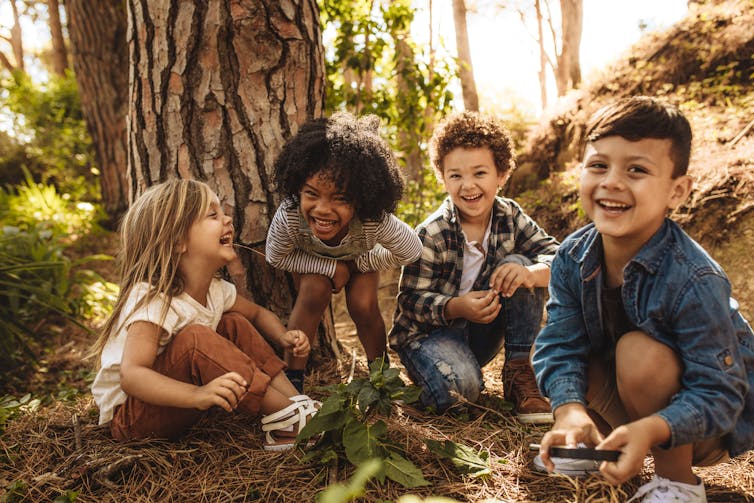
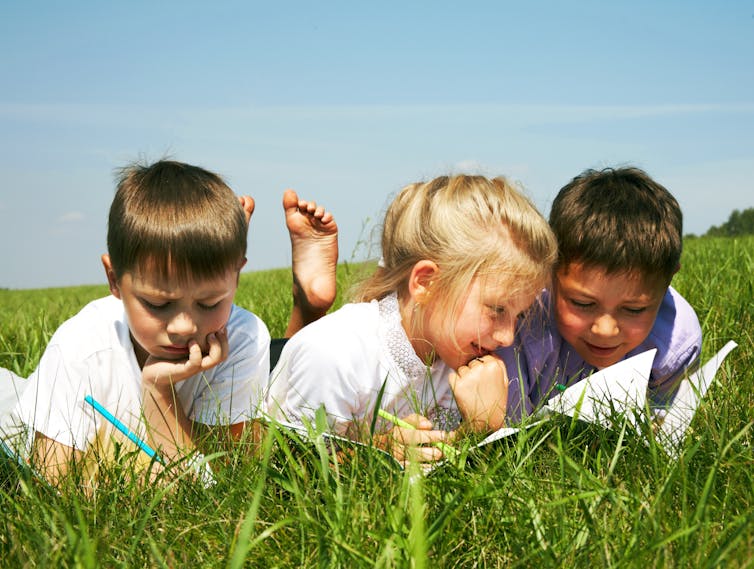
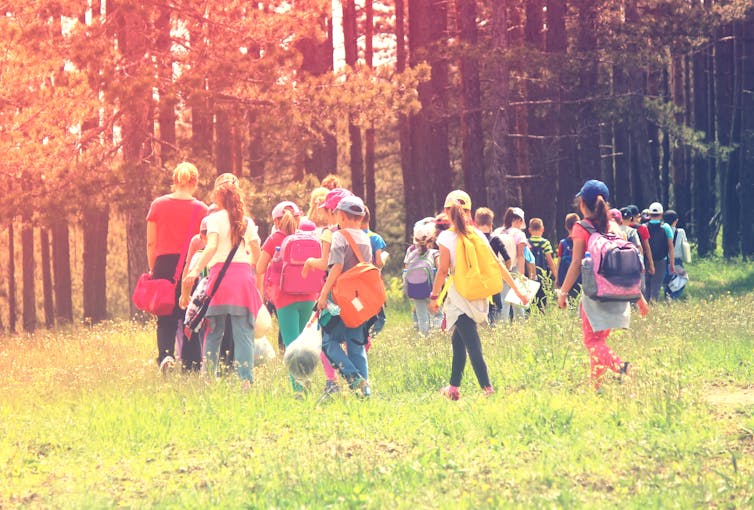
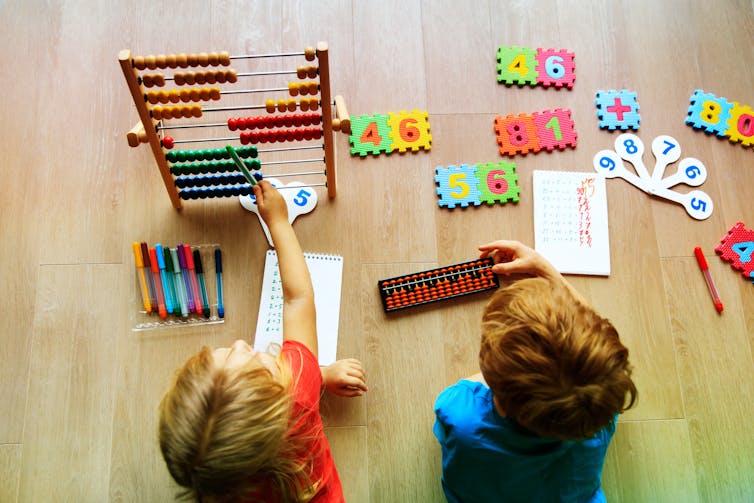
Despite all the research that tells parents how good it is for their children to spend time playing outside, they are spending more time indoors than ever before. It seems that concerns about the dangers of climbing trees or getting lost means that many parents are nervous about allowing their children to engage in risky play. But research suggests that this element of outdoor play has significant benefits for children and can help to develop their emotional resilience. Over the last decade and a half, schools have started to recognise the importance of outdoor time for children – resulting in the development of programmes that take learning outside the classroom. One of these programmes which has increased in popularity over recent years, is Forest School. What is forest school?
Forest School is an outdoor learning initiative which embraces outdoor play in wooded spaces as a tool for learning and development. In the UK, the Forest School movement can be traced back to the early 1990s when a group of early years educators at Bridgewater College in Somerset day went on a trip to Denmark. They noted how the Scandinavian values of open-air living were embedded in the education system. Upon their return from Denmark, they developed the first Forest School in the college creche, followed by a B-Tech qualification in Forest School practice. The Bridgewater group set in motion the development of Forest School provision through structured training programmes for Forest School practitioners. Today the Forest School Association – the UK professional body for Forest School practitioners – has more than 1,500 members. During Forest School, children and young people are provided with opportunities to explore the natural environment, experience appropriate risk and challenge, and direct their own learning. Research has shown that Forest School stimulates imaginative play through hands-on engagement with the natural environment. In our research, which included more than 30 interviews with children aged between four and nine, we wanted to understand how play in Forest School might facilitate learning. We found that during Forest School, children felt more independent, and as a result, had a greater sense of personal, social and environmental responsibility. Children felt that they were able to apply skills they had learned in school in more meaningful ways and developed a range of non-academic skills. Forest School encouraged them to think creatively – to step out of their comfort zone and take risks – and to work more closely with their peers. They also reported being more physically active during Forest School – learning how to move safely in the unpredictable and challenging space of a woodland. Making movements matter The World Health Organisation has recently argued that young children need more opportunity to play in order to grow up healthy. But despite the clear benefits, Forest School is still somewhat misunderstood. To the outsider, it is often considered as a separate form of education provision – and indeed, there are some full-time outdoor Forest School nurseries operating in the UK, such as Wildawood Forest School in Cambridgeshire. But most Forest Schools operate within mainstream state schools, where children leave their classrooms for a half or full day, usually once or twice a week, to attend Forest School.
We spoke to children, headteachers and Forest School leaders in two primary schools and found that this bridging of formal and informal learning can be complementary to one another. Children and headteachers acknowledged that the school system can stifle children’s natural curiosity about the world. Children recognise that while they learn a lot in the classroom, this tends to be directed by teachers and focused on passing tests. Headteachers also recognised the pressure children are put under from a young age, and of the need to frequently demonstrate pupil progression against set targets. Forest School, for both pupil and teacher, is an opportunity to move away from the monotony of classroom learning and instead to engage in hands-on, self-directed learning. This gives children the opportunity to develop other skills beyond the academic – including negotiation, resilience and independence. And in this way, the blending of these approaches to learning ensures that children have opportunity to develop a broader range of skills. All of which, prepares them for later life, while helping them to harness a love of the great outdoors from an early age.
During a recent lecture, I purposefully antagonized students. I belittled one student by criticizing him in front of others. I favored another student by telling other students they should be more like her. I responded impatiently to questions. I told one student his contribution to class was incompetent. Yes, I felt like a jerk by doing this. But don’t worry, this was not a real college class. Fortunately, this was a video lecture. The “students” I antagonized in the video were actually actors. No students’ grades were harmed and no feelings were hurt. So what’s the point? As a communication studies professor who researches effective teaching, my colleagues and I purposefully antagonized the students in the video lecture to see how it affected other students’ ability to learn. Our acts were meant to be what is known as “instructor misbehavior.” We had student participants attend this prerecorded video lecture, then share their thoughts and take a test on the lecture material. We wanted to determine if being hostile to students caused them to learn less. Levels of misbehavior Not every bad thing that an instructor does is as bad as the ones I did for our study. Some are relatively minor, such as showing up a few minutes late to office hours. These types of things may detract from a learning environment, but students can recover easily from a few simple mistakes or inconveniences caused by a professor. But some types of serious misbehavior can hurt the learning environment. These include taking four weeks to return graded assignments, not responding to student emails, deviating substantially from a syllabus or showing up ill-prepared. The worst thing an instructor can do, from my perspective, is antagonize their students. It may be rare, but students regularly identify antagonism as the most significant misbehavior. So what happened to those “students” who had the misfortune of having me as their antagonistic professor? Impact on grades In our experiment, college students were randomly assigned to one lecture taught by me without antagonism or the same lecture taught with antagonizing remarks. We found that students disliked the course content more in the lecture where I was antagonistic. Those students also scored between 3 and 5 percent lower on a quiz of the material. One of the most surprising findings is that the “best” students’ learning was compromised the most. Those who most valued their learning opportunities and who worked the hardest in the face of distraction lost an average of 5 percent on the quiz. Mindful communication College professors have choices about how they communicate with students in the classroom, even if they subscribe to a “tell-it-like-it-is” philosophy. It’s not just about the quality of the content. It’s also about how that content is communicated. Students deserve to be taught in optimal learning environments, and for that to happen, professors need to lay off the antagonism. When they don’t, it could drag down the entire class.
Simply taking lessons outside can do wonders for children’s education and well-being.
legenda/Shutterstock Research shows that healthier and happier children do better in school, and that education is an important determinant of future health. But education is not just about lessons within the four walls of a classroom. The outdoor environment encourages skills such as problem solving and negotiating risk which are important for child development. But opportunities for children to access the natural environment are diminishing. Children are spending less time outside due to concerns over safety, traffic, crime, and parental worries. Modern environments have reduced amounts of open green spaces too, while technology has increased children’s sedentary time. It is for these reasons and more that many think schools have arguably the greatest potential – and responsibility – to give children access to natural environments. This is not just about improving break times and PE lessons, however. Across the UK, teachers are getting children outdoors by delivering curriculum-based lessons in school grounds or local areas. A variety of subjects, such as maths, art and science, are all being taken outside.
Teachers are taking pupils into local natural areas to learn curriculum-based subjects.springtime78/Shutterstock Although there are no official statistics on how much outdoor learning is used, researchers have seen that its use is increasing. And while it is not part of the country’s curricula for year three onwards in primary schools (age seven up), these outdoor initiatives are supported for all ages by the UK government, which has invested in the Natural Connections project run by Plymouth University, for example, and Nature Friendly Schools run by The WildLife Trusts. However, despite the support, outdoor learning is still underused in primary schools – particularly in the latter years, when children are aged between seven and 11. So if there are such big benefits to outdoor learning, why isn’t it happening more often? For our recently published study, we spoke to teachers and pupils to find out. School adventures Through interviews and focus groups, we asked teachers and pupils their opinions on outdoor learning. The participants we spoke to all take part in the HAPPEN project, our primary school health and education network. These educators and students (aged between nine and 11) engage in outdoor learning – which we classed as teaching the curriculum in the natural environment – for at least an hour a week. Overall, the participants spoke of a wide range of benefits to pupils’ well-being and learning. However, a number of challenges also existed. The pupils felt a sense of freedom when outside the restricting walls of the classroom. They felt more able to express themselves, and enjoyed being able to move about more too. They also said they felt more engaged and were more positive about the learning experience. In addition, we also heard many say that their well-being and memory were better. One student commented:
When we go out to the woods we don’t really know we’re doing it but we’re actually doing maths and we’re doing English, so it’s just making it educational and fun at the same time.
Teachers meanwhile discussed the different approach to lessons, and how it helped engage all types of learners. They also felt that children have a right to be outdoors – especially at a time when their opportunities to access the natural environment is limited – and schools were in a position to fulfil this. Importantly, the teachers spoke of increased job satisfaction, and that they felt that it was “just what I came into teaching for”. This is particularly important as teacher well-being is an essential factor in creating stable environments for pupils to learn, and current teacher retention rates are worrying. Rules and boundaries At first the teachers had concerns over safety, but once pupils had got used to outdoor learning as part of their lessons, they respected the clear rules and boundaries. However, the teachers also told us that one of the main reasons why they didn’t use outdoor learning more often was because it made it difficult to measure and assess learning outcomes. The narrow measurements that schools are currently judged on conflict with the wider benefits that outdoor learning brings to children’s education and skill development. It is hard to demonstrate the learning from outdoors teaching using current assessment methods. As one teacher said, “there is such a pressure now to have evidence for every session, or something in a box, it is difficult to evidence the learning [outdoors]”. Funding was also raised an issue as outdoor clothes, teacher training and equipment all need additional resources. Our findings add to the evidence that just an hour or two of outdoor learning every week engages children, improves their well-being and increases teachers’ job satisfaction. If we want our children to have opportunities where “you don’t even feel like you’re actually learning, you just feel like you are on an adventure” and teachers to “be those people we are, not robots that it felt like we should be”, we need to change the way we think about school lessons. Teaching doesn’t need to follow a rigid classroom format – a simple change like going outside can have tremendous benefits.
Singapore and Shanghai both do very well in international PISA tests compared to England, but the way both places approach mastery is slightly different. The mastery method adopted in English schools has mostly been modelled on the Shanghai system – and has involved teachers from England going to Shanghai and having Shanghai teachers go to England. We have spent the past four years researching whether the Shanghai exchange would lead to changes in teaching in England and whether this would lead to better test scores. We found that in many of the schools that were involved in the first exchange in 2014-2015 there have been a lot of changes – and many adopted Shanghai-style maths teaching. These changes have involved slowing down the curriculum, using more learning by heart, more interaction between teacher and pupils, and using different ways of representing maths ideas. Schools have also adopted ways to give all children access to challenging maths. But when we compared the test scores to similar schools who have not adopted the mastery method, we found there had been no change in the test results of 11-year-olds. For seven-year-olds we found a small change but nothing that would suggest a massive improvement in scores from the new mastery method. Importing education Perhaps this isn’t surprising though, because teaching methods are not the only reason for East Asian success. And in some ways, Shanghai maths hasn’t yet had a fair test in England. UK teachers have been expected to adopt Shanghai approaches, but have not had the same amount of time for professional development or to plan lessons. There’s also the fact that in Shanghai primary schools, children are generally taught by the same teacher for two to three years – so the teacher gets to know the pupils very well. Policies in China that have led to many parents only having one child also mean that young children get a lot of adult attention from parents and grandparents – which could also help their development.
Read more:
Maths challenge: England has one of the biggest gaps between high and low performing pupils in the developed world Although Shanghai maths imported to England has not had the effect on results that was hoped for, it does not mean that with more time it cannot lead to improvements. And there are particular ideas in the Shanghai maths approach – such as high quality mathematical talk and careful choice of how to represent maths ideas – that do have evidence for success in England as well as other countries. Further afield If East Asian methods do not import easily because of other factors, then perhaps politicians should broaden where they look for ideas in maths. Switzerland, for example, was the top European performer in maths in PISA in 2015 – not far behind East Asian countries. Canada also did significantly better than England. Though recently, Canadians have also started worrying about their performance.
Children as young as two are grouped by ability in English nurseries.Shutterstock There’s also more that can be learnt from PISA and other international tests. It seems, for example, that all high-performing education systems have some common features. These include: supporting teachers with good pay, conditions and status. Teachers that are given the freedom to decide what and how to teach with support from researchers but without political interference, also seems to be another contributing factor. As does having an emphasis on good outcomes for everyone – not just the highest performing children – most high performing countries do not group children by ability from a young age, as often happens in England. In any case, different tests tell different stories. Another international test – Trends in Maths and Science study – shows England’s results in maths have been steadily improving for the past 20 years. Perhaps then, the most important lesson from England’s mastery experiment is to stop worrying so much about international league table positions – and for schools to focus on encouraging all pupils to be the best they can be.
Read more:
Why global education rankings don't reveal the whole picture Mark Boylan, Professor of Education, Sheffield Hallam University This article is republished from The Conversation under a Creative Commons license. Read the original article.
by Lorele Mackie, University of Stirling, The Conversation: https://theconversation.com/profiles/lorele-mackie-577669 ShutterstockAt the beginning of this school year, it wasn’t just children who were grumbling about homework. A despairing comment on social media by comedian Rob Delaney about the amount demanded of his children sparked much debate – and plenty of support from frustrated parents. Not everyone agrees of course. According to the Campaign for Real Education group:
A little bit of homework to support what you’re doing in the classroom, involving your parents and guardians, is really good because it allows you to do as well as everybody else in the world.
Traditionally, in the UK, primary teachers are expected to hand out homework every day of the school week. At the start of my own career in teaching in the 1990s, school policy dictated that assignments consisted of reading from the literacy scheme book, spelling words to learn and sentences to write, as well as some numeracy linked to the current concept being taught, or revision of another. It didn’t exactly sound motivating for the pupils … The “no homework” policy currently adopted by some headteachers was not an option that was discussed or even considered. But over time, my increasing professional confidence made me feel able to question school policy. I tried to offer pupils homework tasks which engaged them – and which also served some sort of educational purpose. Pupils responded positively to the change and there is research that supports such an approach. Education expert John Hattie, who has analysed student achievement in great detail, claims that homework does not assist the progress of primary school pupils where the content is not linked to classroom concepts. He said: “The worst thing you can do with homework is give kids projects; the best thing you can do is reinforce something you’ve already learned.” Other arguments in a similar vein maintain that home-based revision is helpful for long-term memory retention. Parental views vary of course, but those in favour may see the value of home work not just as helpful in terms of the school curriculum, but also in developing important skills in time management, organisation, self discipline and independence. In spite of these arguments, I still wonder how beneficial homework really is. Are any benefits more important than activities missed or time spent with parents, guardians or siblings? Was handing out homework the best use of my time and effort as a teacher? When you consider the importance of quality feedback, the value of homework continues to be questionable. For teachers, collecting in homework at the end of the day or week for marking and assessment causes substantive time pressure in an already pressured environment.
If homework is to be of value to learning, teachers need to offer an appropriate response of quality. This takes time, and would be better carried out through dialogue rather than written comments in a homework jotter that pupils may or may not pay attention to. Lesson learned Would pupils not gain more from engaging in other activities such as sport or music of their choice? Put simply, such activities offer learning opportunities which could be as valuable as homework, if not more so, given that they are chosen by the children themselves.
Read more:
A-levels vs the International Baccalaureate: which makes a more rounded student? In addition, these kind of activities may involve spending positive quality time with other members of society such as family and friends. Spending home time on school work can cause tension within families, with stress and resentment on both sides. Children may see homework as taking time away from activities of their choice while parents are placed in a position of feeling compelled to make sure it is completed. It also comes with the assumption that they are able to provide requisite support. Such an assumption does not account for the diversity of educational backgrounds that exist in parents. So, if I was back in front of a class full of primary school pupils at the end of a day, what would my approach to homework be? Well, with experience comes the ability to adopt a broader perspective on life and schooling – so my likely response would be to adopt a “no homework” policy. Instead, I’d advise them to choose an enjoyable activity which involves learning new things and interacting with others. The literacy scheme and numeracy concepts can wait until tomorrow. Lorele Mackie, Lecturer in Education, University of Stirling This article is republished from The Conversation under a Creative Commons license. Read the original article.
Writing for pleasure improves long-term learning outcomes in a range of areas, including maths and science.
www.shutterstock.com NAPLAN results indicate a decline in students’ ability to write. Outcomes in literacy, including writing, affect student achievement across multiple subject areas (including maths and science).
Read more:
NAPLAN writing tests hinder creativity, so what could we use in their place? There is a clear link between students being engaged with writing and the quality of literacy outcomes. Students’ willingness to write can be promoted by making writing more enjoyable and meaningful to young people, with authentic connections to their lives.
The power of expressive writing
Research in English and literacy education consistently shows when teachers are given the scope to tap into students’ interests, they can produce work of high quality. To increase students’ enjoyment of writing, more time could be given to creative forms of writing such as poetry, song lyrics, short scripts, personal memoirs and comic pieces, and combinations of different types of texts with visual materials in multimodal and digital composition.
It’s important for children’s literacy for them to fall in love with writing.www.shutterstock.com We now have a rich body of research and toolkits that support teachers in writing instruction. Building on good writing instruction, it’s also important for writing to be an activity done for intrinsic purposes such as pleasure. The Australian Association for the Teaching of English asserts the importance of this goal. Writing is more than work for achieving an outcome. It’s identity work. In the enjoyment of writing, student writers can find themselves and discover the power of language. Powerful literacy skills can be gained in this discovery, with lifelong implications.
Tackling the decline in writing for pleasure in schools
Despite the link between writing for enjoyment and positive literacy results, there is accumulating evidence that writing instruction in schools is becoming limited.
The current focus on forms of writing tested in standardised formats, such as tests like NAPLAN and PIRLS, puts pressure on teachers and schools to narrow writing instruction. Typically, this would mean a focus on producing essays, persuasive pieces, reports, recounts, descriptive writing and procedural texts.
Read more:
Decluttering the NSW curriculum: why reducing the number of subjects isn't the answer In NSW, Geoff Masters, the CEO of the Australian Council for Educational Research (ACER), is overseeing a comprehensive review of that state’s curriculum. He has already noted teachers and school leaders are bound by an inflexible curriculum. This includes approaches to writing and literacy that focus too heavily on prescribed functional texts. Other research by ACER suggests the need for more openness and innovation in teaching writing. Teachers are committed to improving their students’ writing, given the emphasis in class on assessment of writing by NAPLAN and other international tests. But they also need to feel they can allow more time for unstructured or personal writing that promotes creative writing identities for students.
A focus on testing can stifle pleasure in writing.www.shutterstock.com For example, teaching multimodal composition (where two or more modes such as written language, spoken language, visual or audio are combined) and writing designed for performance alongside mandated forms of writing (such as persuasive, narrative or instructional writing) would allow students to develop important skills in writing that reflect the emerging digital world and a range of necessary literacy competencies. The key to promoting the effective writing skills needed by students is to be found in making writing engaging, meaningful and pleasurable. Every opportunity should be taken to open up the possibilities of writing for students so they want to do it and see its relevance to their lives. There also needs to be a shift in the current policy and assessment emphasis on specific outcomes to one which empowers teachers to promote writing to learn and writing for enjoyment.
Encouraging writing for enjoyment
What can teachers and parents do at home and at school to foster an enjoyment of writing?
Teachers can promote enjoyable writing with meaningful writing environments.www.shutterstock.com At home Parents can encourage children to write for pleasure, not just for school work. For example, having a personal diary or journal, and in it writing about life, what interests them, or for imagining, storytelling and wondering.
Read more:
Why the teaching of creative writing matters At school Teachers can open up writing for pleasure in their classrooms, either as a core activity or as an extension after other work is completed. There can be a special class time to share or perform creative and personal writing and for other students to comment about it. Teachers can also write alongside students to model good writing behaviours. Schools can promote writing clubs where students can write together, share their writing and even self-publish it in online forums and blogs.
The word “kindergarten” originated in the 1840s from the ideologies of German educator Friedrich Froebel and literally translates to “children garden”. Propelled by innate curiosity and wonder, a Froebelian approach to education is premised on the understanding students learn best when they undertake imaginative play and curious exploration. Not only is outdoor play central to children’s enjoyment of childhood, it teaches critical life skills and enhances growth and development. Contemporary research shows outdoor play-based learning can also help improve educational outcomes. A recent study found being outside stimulated learning and improved concentration and test scores. Nature contact also plays a crucial role in brain development with one recent study finding cognitive development was promoted in association with outdoor green space, particularly with greenness at schools. Contact with nature boosts brain development.from www.shutterstock.edu.au Autonomy and freedom in the outdoors is both liberating and empowering for kids. Burning off excess energy outdoors makes children calmer and fosters pro-social behaviours. Teaching and learning in natural environments encourages self-mastery through risk taking, physical fitness, resilience, self-regulation, and student-centred discovery. Imagination is also enhanced by free, unstructured play.
Read more:
Play-based learning can set your child up for success at school and beyond
How to get kids outdoors more
Children need outdoor play, but we’re not giving them enough opportunity. Countries such as Denmark, Sweden, Finland and Norway spend up to half the school day outdoors (rain, hail or shine) exploring the real-world application of their classroom learning. Here’s what parents and teachers can do to get kids outside more. Taking the classroom outside Children learn better when they can experience learning, rather than hearing it read from a text book. A study in Chicago used brain scans to show students who took a hands-on approach to learninghad experienced an activation in their sensory and motor-related parts of the brain. Later, their recall of concepts and information was shown to have greater clarity and accuracy. Practical lessons outside will stick better in young brains than learning theory from a book. This may be why in 2017, the Australian Curriculum and Assessment Authority (ACARA) included outdoor learning in the national curriculum.
Options for teachers include taking the class outside to write poetry about nature, measuring the height of trees for maths classes, or de-stressing using mindfulness and breathing techniques while sitting quietly in the shade of a tree. An upcoming initiative Outdoor Classroom Day is happening in schools across Australia on November 1. This is a day where teachers are encouraged to take their classes outside. Alternatively, parents can make a special effort to take their child to the local park, river or beach. Less time on screens Conversations with parents and teachers show they’re increasingly concerned about technology’s broader impact on their children, in both dramatic and subtle ways. In many ways our hunger for technology has overridden our desire for direct human interaction. Screens compete directly with authentic channels of communication such as face-to-face interaction. To combat this, parents can assign one hour on and one hour off screens. Parents are role models and so we also need to monitor our own time on screens and spend quality time with children detached from our digital devices. The sad reality is technology can become a pseudo-parenting device, a form of pacifier to keep the kids busy. Instead, we can encourage our kids to engage in simple, unstructured play experiences. These could include creating an outdoor scavenger hunt where they collect items from nature, building forts or dens incorporating inexpensive materials such as branches and old sheets or blankets, climbing trees, or laying on the grass and looking upwards into the sky to watch the cloud formations. Other methods include making mud pies or sandcastles at the beach or in a sandbox; encouraging the collection of feathers, petals, leaves, stones, driftwood, twigs or sticks to make creative artworks on large sheets of paper; planting a garden with vegetable seedlings or flowers with your child (let them decide what will be planted); putting on a jacket and gumboots when it rains and jump in puddles together; or making an outdoor swing or billycart. Nature offers a never-ending playground of possibilities with all the resources and facilities needed. If stuck, search on the web for wild play or nature play groups nearby as they are growing in popularity and number. But most importantly, reinforce the message that getting wet, having dirt stains on their clothes and getting their hair messy is good and adds to the fun.