Monday, October 5, 2020

As universities face losing 1 in 10 staff, COVID-driven cuts create 4 key risks

by Ian Marshman, Elizabeth Bare, and Janet Beard, The Conversation:  https://theconversation.com/as-universities-face-losing-1-in-10-staff-covid-driven-cuts-create-4-key-risks-147007


The COVID-19 pandemic caused a sudden and very big  decline in Australian universities’ revenue as a result of the loss of international student enrolments. Being excluded from the federal government’s JobKeeper program has forced universities to embark on immediate and sustained cost-cutting. Our newly released research identifies several significant risks associated with this approach.

Most universities have tried to reduce the impact on their permanent workforce. They have contained infrastructure programs and other operational costs, cut executives’ pay, reduced casual staff, frozen hiring and drawn on any available reserves.

However, 57% of Australian university expenditure was allocated to employment and related costs of an estimated total higher education workforce of 137,000 full-time equivalent (FTE) staff in 2019. Workforce savings are an inevitable consequence.

Drawing on media reporting of university responses to mid-September 2020, we estimate the financial impact of the pandemic at A$3.8 billion for 2020. We estimate overall job loss expectations for continuing appointments to be at least 5,600 full-time equivalent staff. A conservative 25% reduction in casual and research-only fixed-term staff could result in further losses equivalent to 7,500 FTE, or an estimated 17,500 people.

In FTE terms, the total loss amounts to 10% of the workforce. In terms of the number of individuals losing jobs, the loss is greater.

Two approaches to cutting staff costs

To date, Australian public universities have taken two different approaches to cutting employment costs.

Firstly, ten universities have gained staff support to vary their enterprise agreements. These universities have individually adopted an approach similar to an earlier national Job Protection Framework proposal. That arrangement failed to gain sector-wide consensus.
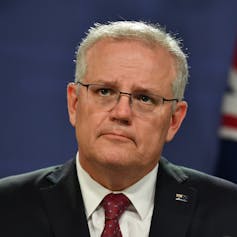
Prime Minister Scott Morrison
Being denied access to the Morrison government’s JobKeeper program has forced universities to cut tens of thousands of jobs. Dean Lewins/AAP

Enterprise agreement variations enable these universities to reduce or delay job losses by freezing salary increases and purchasing leave entitlements. While saving some jobs, some of these universities have continued with agreed voluntary redundancy programs this year and are reserving options for next year.

Secondly, 17 universities have taken a management-led approach. These universities have implemented voluntary and involuntary redundancy programs within the framework of existing enterprise agreements.

Of the remaining universities, one has signalled it is not anticipating significant workforce change. Nine are still considering their responses, or are in discussions with staff and unions, or there is limited publicly available information.

What risks do job cuts create?

Clearly, there is an immediate imperative driving most universities to reduce staff numbers. However, a COVID-19 response based on widespread staff reductions creates risks for universities. These include:

1. Inability to teach growing numbers of domestic students

Despite a decline in international students, some universities are reporting increased demand for domestic university places in semester 2 of 2020. A forecast decline in employment opportunities is likely to increase pressure on universities in 2021 to increase enrolments beyond 2020’s planned levels.

Across the board, voluntary redundancy programs are likely to lead to academic staff shortages in some discipline areas and loss of academic leaders. This could result in:

  • reduced capacity to absorb the increased demand for places

  • a decline in the quality of programs

  • diminished skilling of the future workforce.

2. Impact on research productivity

Reducing casual staff will increase pressure on continuing and fixed-term staff to dedicate more time to teaching and less to research. Research capacity will be reduced. Cuts to fixed-term early career researchers are an easy but not a strategic approach.

Combined, such actions will reduce research output. The result will be a decline in the overall capability of Australian university research.

3. Less capacity to reconfigure and rebuild to be effective in a post-COVID world.

Continual redundancy rounds and “death by a thousand cuts” are an undesirable consequence of many “bottom-up” voluntary redundancy processes. These are essentially tactical rather than strategy-led initiatives. They lead to diminished institutional capability and loss of institutional memory.

This is happening at a time that demands rethinking of the whole of higher education. This approach should include:

  • a greater focus on evidence-based and targeted cost reductions

  • investment in and development of new growth opportunities

  • an enhanced digital learning and student experience.

4. A weaker international market position

An inability to maintain current levels of academic commitment to research risks a slide in world rankings if universities elsewhere sustain their research productivity. This would reduce the attractiveness of Australian universities for international students and international research and industry collaborations. And that, in turn, would threaten future funding of higher education.

Universities have a significant role in the national and global COVID-19 recovery. They must contribute to the reskilling of workers and employment growth, provide educational opportunities for school leavers, research medical innovations such as COVID-19 treatments and vaccines, and collaborate in creating new industries and jobs.

This national role is threatened by an apparent unwillingness on the part of government to recognise and respond to the funding crisis in Australian higher education. Universities face a difficult balancing act to avoid cutting staff numbers so deeply that they lose the capacity to support the nation’s recovery, maintain international standing, drive innovation and discovery, and contribute to the well-being and prosperity of all Australians.

Sunday, October 4, 2020

The PhD: A, the, an or some? Articles with abstract nouns in doctoral writing

by Susan Carter: Doctoral Writing SIG:  https://doctoralwriting.wordpress.com/2020/09/28/a-the-an-or-some-articles-with-abstract-nouns-in-doctoral-writing/


Whenever I correct articles in doctoral writing, I get tangled trying to explain why, and often, like now, can only conclude that English is a sod of a language with tricky slithery rules that you simply have to learn and apply. Rules with English grammar do not always have an apparent logic. Those little prefixes to nouns, the troupe of articles, are as troublesome for many doctoral writers as getting journal articles published is for others.

It’s quite hard sometimes deciding whether a noun needs an article, and which one it might need. That is because many nouns in research writing are abstract, sometimes influenced by theory. It’s sometimes hard to tell whether abstracts are countable or uncountable, for example. This post grapples with the task of suggesting how to make those ‘to article or not to article’ decisions.

There are rules about article use that mostly work in straight forward ways with concrete nouns, and grammar book examples always use concrete nouns. Concrete nouns are very likeable because they are straightforward, words like ‘chair’, ‘dog’ and ‘lunch.’ It is helpful to know such rules, but I am trying to extend them to those troubling big abstract nouns, like ‘generalisability,’ ‘ideology’ and ‘viscosity’, that dwell in doctoral writing. And I am wondering whether some of the rules about article use contradict each other and that is where it gets challenging.

Rules about articles that derive from the use of concrete nouns

At risk of boring those who know this stuff inside out, because not everyone does I will rehearse that there are just a couple of criteria for choice articles with concrete nouns. One is whether the noun is plural or singular. We quickly learn not to use ‘a’ with a plural noun.

Other criteria consider whether the audience already knows what you are talking about because it is something specific. Nouns have names that give a clue as to when to use articles with them: ‘a’ is used with an indefinite noun and ‘the’ with a definite noun. If a noun is indefinite, your audience doesn’t know which specific one of its kind you mean. The indefinite term is general. If a noun is definite, then listeners definitely do know exactly which one.

‘A’ goes with indefinite, and ‘the’ with definite. On first use of a noun (when the listener or reader doesn’t already know what it is), we use ‘a’ and thereafter, when the audience knows which one we mean, we use ‘the’. I live in house. The house has two bedrooms. We cannot use ‘the’ on first mention—if I am asked ‘What sort of place do you live in’ I cannot reply ‘I live in the house’. We use ‘the’ when the audience knows what we are talking about and we cannot use it when they don’t—that rule is likely to be handy in academic prose.

We can use ‘the’ when we mean ‘all’, that is, when we are making a general rule: The dog is a mammal with four legs.  However, we also do not need to do it that way—another option is to use the plural with no article: Dogs are mammals with four legs. I prefer the latter version as it is slightly less formal and stiff. A friend commented that she learned the plural version as the ‘silent all’ rule, that is, there’s an understood but unstated ‘silent all’ before dogs. The silent all rule may be useful for doctoral writers using abstract nouns.

We use ‘the’ and ‘some’ for both countable and uncountable nouns. Could you bring the water and the apples? or Could you bring some water and some apples? Both work well. The nuance of difference is so slight here as to not matter. There is a slight nuance. If I use ‘the’, I’m implying either that my audience and I have already agreed there should be water and apples or that I have decided this and am assuming that my audience will agree with me, or be obliged to agree with me. Not enough to worry about unless you are in a situation where slight nuances do matter. ‘The’ signals something definite and specific, and ‘some’ any that come to hand. If in your thesis, you have already mentioned nouns, including abstract nouns, it’s slightly stronger to use ‘the’ rather than some when mentioning the same nouns again.

Are there rules about when to use articles and when they are not required? Well, this is takes you into a grey zone where decisions can be tricky; often when I suggest changes to doctoral writing it is around just this point. Some uncountable nouns don’t usually take an article: We chose icecream for dessert is a concrete example. And then, countable nouns don’t take an article when you are not being specific: We added strawberries. If the audience had already been told what was on the menu, then you’d probably use ‘the’ for both icecream and strawberries. Does that menu talk use of ‘the’—‘I’ll have the fish’—apply to items already mentioned in a thesis?

Turning these rules to the complex abstract nouns of doctoral writing

A colleague, Dr Jenny Jones, gave me material to help with this task. Harrison, Jakeman and Paterson (2012, p. 28) clarify very helpfully that you ‘don’t use “the” when you are generalising or talking about abstract concepts’. So if you are talking about research in general, ‘Research shows that…’, you do not use ‘the’, whereas if you are giving a few sentences to a specific research project, you would use ‘the’ to acknowledge the specificity: ‘The research also found that….’

An example of generalising nouns without articles would be ‘Theses by publication call for different writing strategies than theses that are monographs.’ Examples of abstract concepts without articles might be ‘Success following thesis submission is usual; failure is usually due to non-completion.’

Then Harrison, Jakeman and Paterson (2012, p. 28) rephrase the rules by noting that ‘the’ is not used with plural nouns when it is understood which particular ones you mean: ‘Readers find a lack of structure difficult to navigate’ would not take the article if it is understood you mean the readers of the thesis. However, they note (p. 29) that ‘the’ can be used when ‘the noun is followed by a phrase explaining or specifying which one or ones are being described, as in the example ‘The readers who have to examine the thesis are often working late at night.’ Grammatically, the sentence works with or without ‘the’, but putting it in also puts subtle emphasis on the specificity of which readers you mean. That can help clarity.

Jenny also shared a link to a decision tree that the Center for Writing at the University of Minnesota produced: it is hugely and practically helpful. And it acts as a good reminder as to just how hard it is to make decisions with each tricky incident.

I think these points help just a little, and yet overwhelmingly I’m still left with how difficult articles are in the wilds of doctoral writing, and how hard it is to define rules that are always true and that always clarify. I’d love help with this task if you know of other good resources or suggestions. Please email us if you would like to offer another post on articles with abstract nouns.